
LVT vs SPC Flooring: What's the Difference?
When homeowners, contractors, and flooring professionals compare waterproof vinyl flooring, two products consistently stand out: LVT (Luxury Vinyl Tile) and SPC (Stone Plastic Composite). Both offer realistic wood and stone designs, excellent water resistance, and easier installation than traditional hardwood flooring. However, their different core constructions result in distinct performance characteristics that influence comfort, dimensional stability, durability, installation, and long-term value. Understanding these differences is the key to choosing the right flooring for your project.
This comprehensive comparison explores the key differences between LVT and SPC flooring, covering durability, comfort, waterproof performance, installation, maintenance, and cost. Whether you're renovating a home, planning a commercial project, or sourcing flooring for your business, this guide will help you make an informed decision.
As a PVC flooring manufacturer with over 22 years of industry experience, Hanflor produces both LVT and SPC flooring for customers worldwide. The insights in this guide are based on manufacturing expertise, technical specifications, product testing, and practical application, giving you an objective comparison to choose the flooring that best fits your needs.
What Is LVT Flooring? Understanding the Flexible Core
LVT (Luxury Vinyl Tile) is a multi-layer vinyl flooring product built around a flexible PVC core. While the exact construction varies by manufacturer, LVT typically consists of a UV coating, a transparent wear layer, a high-resolution printed design film, a flexible PVC core, and a backing layer that improves dimensional stability.
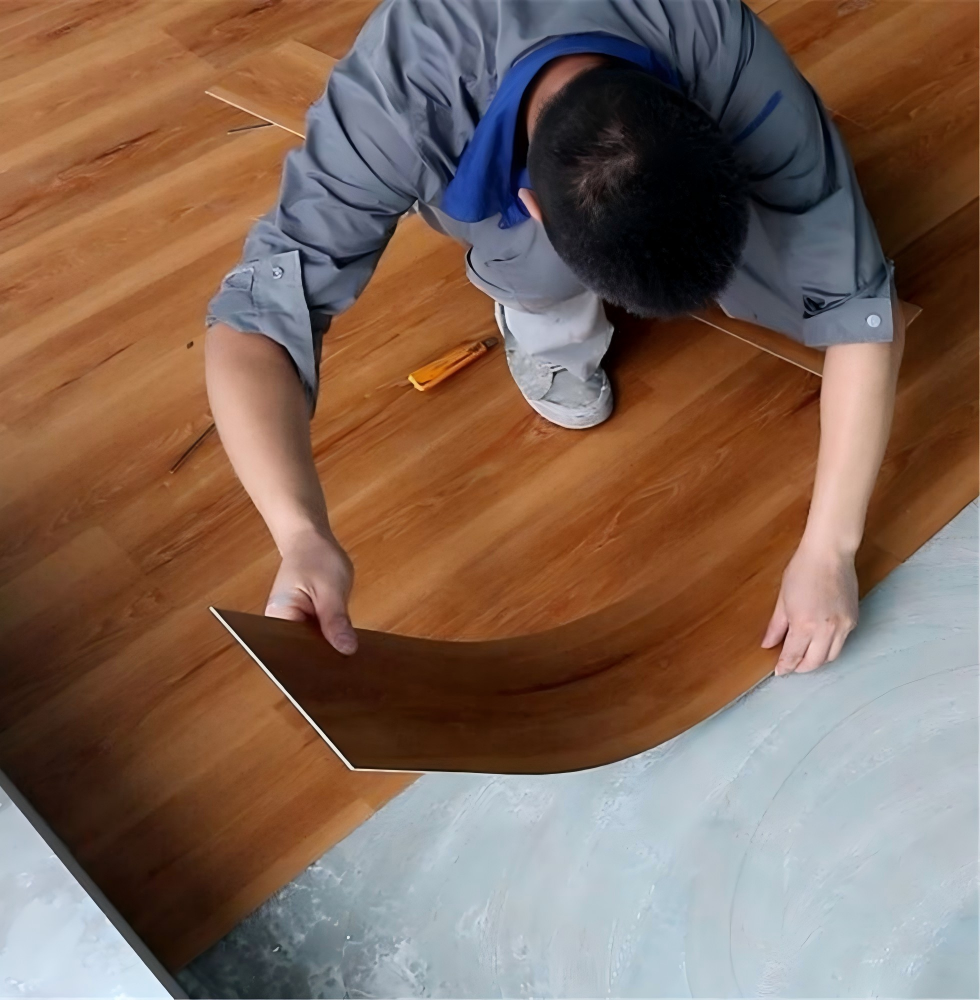
The defining characteristic of LVT is its flexibility. Unlike rigid-core flooring, the flexible PVC core provides a slightly softer and quieter feel underfoot, making LVT a popular choice for living rooms, bedrooms, and other residential spaces. However, because the material conforms more closely to the subfloor, uneven surfaces or imperfections may gradually become visible through the finished floor if proper floor preparation is not completed.
LVT is available in several installation formats, including glue-down, click-lock, and loose-lay. Glue-down LVT is widely used in commercial environments because it provides excellent stability under heavy foot traffic. Click-lock LVT features an interlocking system that allows the floor to float without adhesive, making it popular for DIY installations. Loose-lay LVT relies on its weight and high-friction backing to stay in place, allowing damaged planks to be replaced more easily when needed.
Hanflor LVT Tip: For glue-down LVT, the subfloor should be flat to within 3 mm over a 2 m straightedge. Uneven areas can eventually telegraph through the flexible flooring, resulting in visible imperfections on the finished surface.
What Is SPC Flooring? The Rigid Core Revolution
SPC (Stone Plastic Composite) is a rigid-core vinyl flooring product engineered with a dense core made primarily from limestone powder, PVC resin, and stabilisers. This rigid construction gives SPC exceptional dimensional stability and impact resistance compared with traditional flexible vinyl flooring.
Unlike flexible LVT, SPC resists flexing under normal use and is less likely to reflect minor subfloor imperfections through the finished surface. It also offers excellent resistance to indentation from heavy furniture and maintains its shape in environments with changing temperatures and humidity. These characteristics make SPC a popular choice for kitchens, bathrooms, basements, and high-traffic commercial spaces.
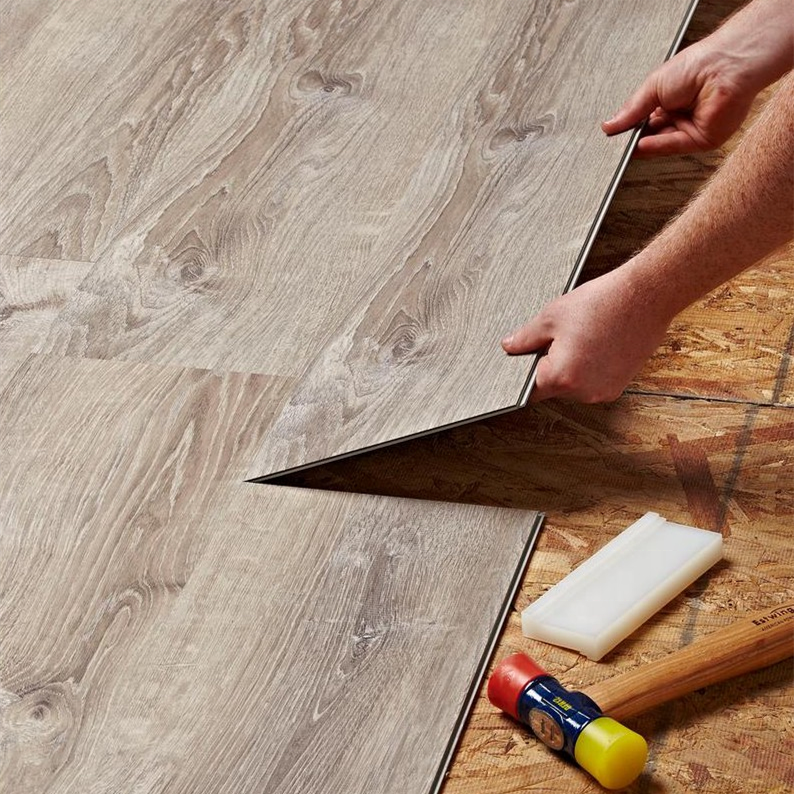
Most SPC flooring is installed as a click-lock floating floor, allowing planks to be fitted without adhesive. Many products also include a pre-attached IXPE or cork underlayment to improve sound insulation, underfoot comfort, and thermal performance, making SPC one of the most DIY-friendly flooring options available.
LVT vs SPC: Core Material Differences That Define Performance
Although LVT and SPC share many similarities, their core constructions are fundamentally different. Those differences influence flexibility, stability, comfort, installation, and overall performance. Here's a side-by-side comparison.
| Feature | LVT (Flexible Core) | SPC (Rigid Core) |
|---|---|---|
| Core material | Flexible PVC Core | PVC Rigid Core |
| Flexibility | Soft and flexible | Rigid and highly stable |
| Thickness range (Typical) | 2mm – 5mm | 3.5mm – 9mm |
| Underfoot Comfort | Low (requires smooth subfloor) | Higher (bridges minor imperfections) |
| Indentation resistance | Moderate (can dent under heavy loads) | High (resists compression) |
| Dimensional Stability | Good | Excellent |
| Heat & Sunlight Resistance | Moderate | Excellent |
| Waterproof | Yes | Yes |
| Installation Options | Glue down, Click, Loose lay | Click |
In everyday use, these differences become more noticeable. SPC offers better resistance to heavy furniture and is less likely to develop permanent indentations over time. LVT, by contrast, provides a softer, more comfortable feel underfoot thanks to its flexible construction. Rather than one being universally better, each product is designed to meet different performance priorities and installation environments.
Waterproof Performance: LVT vs SPC-Which Handles Moisture Better?
Both LVT and SPC are waterproof flooring materials because their PVC-based construction does not absorb water. However, their performance in wet environments differs due to their core construction and installation methods.
SPC features a rigid limestone–PVC core that does not absorb moisture, allowing it to maintain its shape without swelling or warping even after prolonged water exposure. This makes SPC an excellent choice for bathrooms, basements, laundry rooms, and other areas where moisture is common.
LVT is also waterproof at the material level, but its long-term performance depends more on the installation method. In glue-down installations, prolonged standing water may affect certain adhesives or allow moisture to reach the subfloor. In click-lock installations, water can potentially seep through the joints if left standing for an extended period, although high-quality locking systems help minimise this risk.
For spaces with frequent or prolonged moisture exposure, SPC is generally the preferred option. For living rooms, bedrooms, offices, and other areas where spills are cleaned promptly, both LVT and SPC provide excellent waterproof performance.
Durability and Wear Layer Comparison
Durability in vinyl flooring is primarily determined by the wear layer — the transparent protective layer on top of the flooring surface, measured in mils (one mil equals one-thousandth of an inch). Both LVT and SPC flooring use similar wear layer technology, with common options ranging from residential to commercial applications.
- 6 mil: Suitable for light residential use, such as bedrooms and closets.
- 12 mil: A reliable choice for residential spaces, offering good resistance against everyday household activity, including pets.
- 20 mil: Heavy residential and light commercial — ideal for kitchens, hallways, and entryways.
- 28–30 mil: Commercial-grade — designed for retail spaces, offices, and rental properties with constant foot traffic.
While the wear layer determines surface protection, SPC provides an additional advantage through its rigid core structure. With the same wear layer thickness, SPC’s dense core helps maintain better dimensional stability and resistance to impact from heavy furniture or concentrated loads.
For example, when heavy appliances or furniture remain in place for extended periods, the flexible structure of traditional LVT may experience slight indentation over time. In contrast, SPC’s rigid core helps distribute pressure more evenly, keeping the flooring surface stable and reducing the risk of permanent impressions.
Under proper installation and maintenance, both LVT and SPC can provide long-lasting performance. In general, quality SPC flooring is often expected to deliver 20–30 years of residential performance, while premium LVT can provide 15–25 years or more, depending on product quality, usage intensity, and maintenance conditions. The performance difference becomes more noticeable in high-traffic areas and spaces with heavy furniture loads.
Comfort Underfoot: Soft Cushioning vs Solid Stability
Comfort is one area where LVT often has an advantage over SPC, making it an important consideration for residential buyers who value a softer and more comfortable walking experience.
LVT's flexible PVC core provides a softer underfoot feel compared with rigid-core flooring. This flexibility can help reduce fatigue during prolonged standing, making it a popular choice for areas such as kitchens where people may spend extended periods on their feet. The slightly resilient surface also helps absorb impact sound, which generally makes LVT feel quieter and more comfortable underfoot. For homes where a softer walking surface is preferred, LVT offers a more cushioned experience.
SPC's rigid limestone core creates a firmer and more stable surface, which some users compare to the feel of ceramic tile rather than traditional vinyl flooring. Without an attached underlayment, SPC may feel harder underfoot, especially when installed over concrete subfloors where temperature transfer can be more noticeable. However, many modern SPC products include a pre-attached IXPE foam backing, which improves acoustic performance and adds an extra layer of comfort.
For bedrooms, living rooms, and other residential spaces where comfort is a top priority, LVT remains a popular choice. For kitchens, bathrooms, hallways, and commercial areas where durability, waterproof performance, and dimensional stability are critical, SPC provides a practical balance between performance and comfort.
Installation Methods: Glue-Down vs Click-Lock
The installation process is one of the most practical differences between LVT and SPC flooring, directly affecting project cost, installation time, and future flexibility.
Glue-down LVT requires careful subfloor preparation, including cleaning, levelling, and priming, before adhesive application. The adhesive must properly cure before the floor is exposed to heavy foot traffic. Once installed, glue-down LVT provides a highly stable bond with the subfloor, making it a popular choice for commercial environments and high-traffic areas where long-term dimensional stability is essential. However, removal can be more time-consuming compared with floating floor systems.
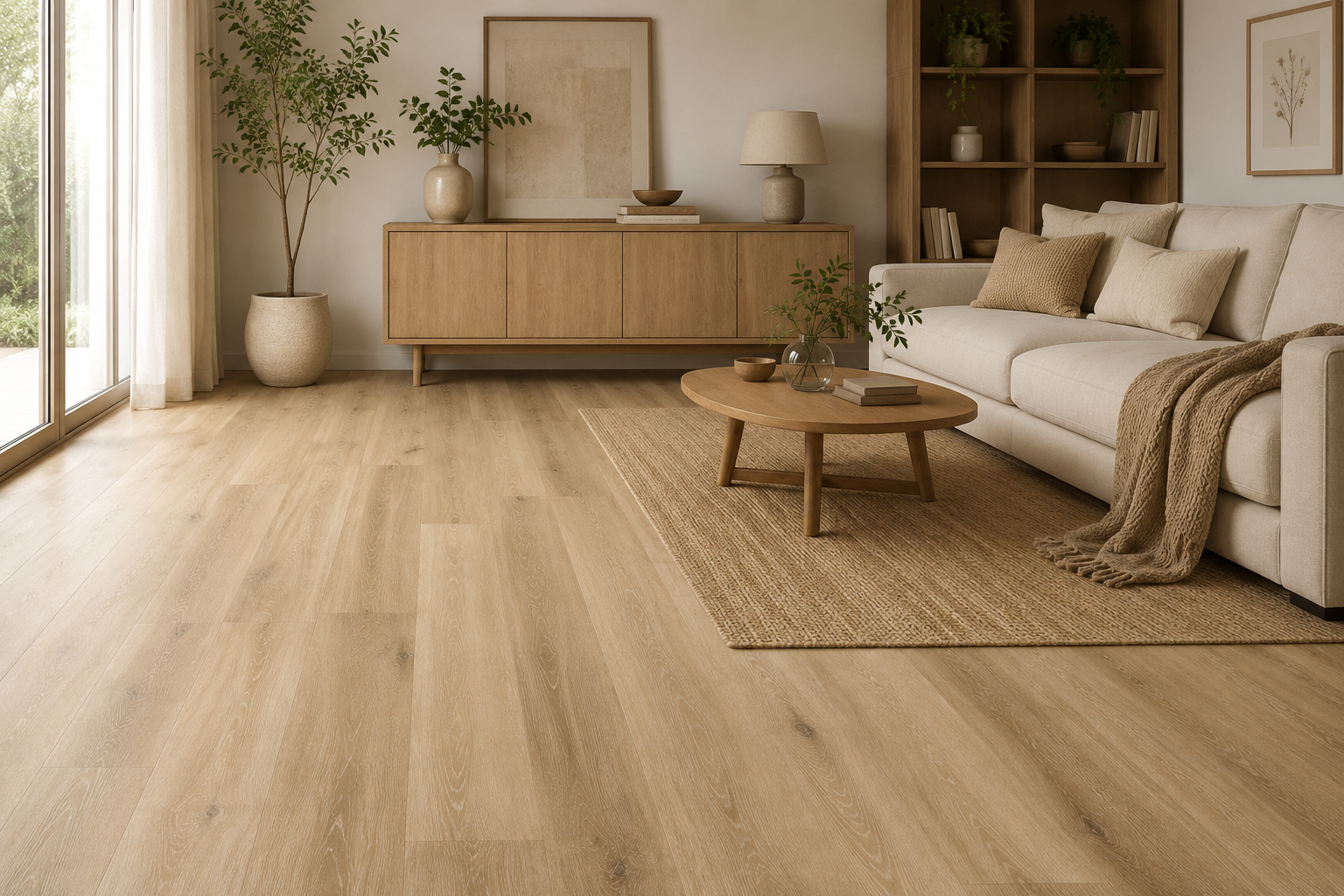
Click SPC uses a floating installation method, with planks locking together without the need for adhesive. This makes installation faster and requires fewer materials and tools. Depending on project conditions and installer experience, a professional crew can typically install hundreds of square feet per day using basic equipment such as a saw and tapping block. The floor can usually be used shortly after installation, and because it is not permanently attached to the subfloor, it can be removed or replaced more easily when renovation or access to the subfloor is required.
Acclimation: Store SPC planks flat in the installation room for 48 hours at 18–28°C. For underfloor heating installations, extend to 72 hours.
Subfloor check: Ensure the subfloor is clean, dry, and flat within 3mm over 2 metres. Minor imperfections may be tolerated, but major uneven areas should be corrected before installation.
Check underlayment: Confirm whether the SPC flooring has a pre-attached pad. If not included, install a suitable underlayment according to the manufacturer's recommendation.
Click and lock: Start from a corner, angle each plank into the previous row's locking groove, and tap gently to seat the joint.
Expansion gaps: Leave 8–10mm around all vertical surfaces. For rooms over 14 metres in any direction, install T-mouldings at doorways.
Dimensional Stability and Temperature Resistance
Dimensional stability — the ability to resist expansion and contraction when temperatures change — is a critical performance metric that directly affects whether your floor develops gaps, buckles, or lifts at the joints over time.
SPC excels here. The limestone-infused core has an extremely low coefficient of thermal expansion (approximately 0.06–0.08 mm/m per degree Celsius). Even with a 20°C seasonal temperature swing across a 10-metre room, total movement stays within 12–16mm — well within the capacity of standard expansion gaps. This stability makes SPC the preferred choice for sunrooms, spaces with large windows, and areas with significant temperature fluctuations.
LVT's flexible PVC core is more susceptible to thermal expansion and contraction. In rooms with direct sunlight or significant temperature variation, LVT planks can expand enough to cause buckling or gap formation at joints. This is why LVT is generally not recommended for sunrooms or conservatories unless specifically rated for high-temperature environments.
For homes in climates with wide seasonal temperature swings, or for rooms with south-facing glass, SPC's dimensional stability provides meaningful long-term peace of mind.
Cost Comparison: Upfront Investment vs Long-Term Value
Cost is often the deciding factor, and the comparison between LVT and SPC involves both immediate and lifecycle considerations.
| Cost Factor | SPC Flooring | LVT Flooring |
|---|---|---|
| Material cost (per sq ft) | $0.6 – $0.79 | $0.32 – $0.89 |
When comparing SPC and LVT flooring, material cost is only one factor to consider. While LVT can have a lower entry price depending on the product specification, the overall value of a flooring solution also depends on installation requirements, durability, maintenance, and application needs.
SPC flooring features a rigid core structure and click-lock installation system, which can help simplify installation and reduce labor complexity compared with traditional glue-down LVT. Its strong dimensional stability, waterproof performance, and resistance to daily wear make it a popular choice for both residential and commercial applications.
LVT remains a versatile flooring solution with a wide range of designs, thickness options, and installation methods, making it suitable for projects where design flexibility and specific installation requirements are priorities.
Best Room-by-Room Recommendations
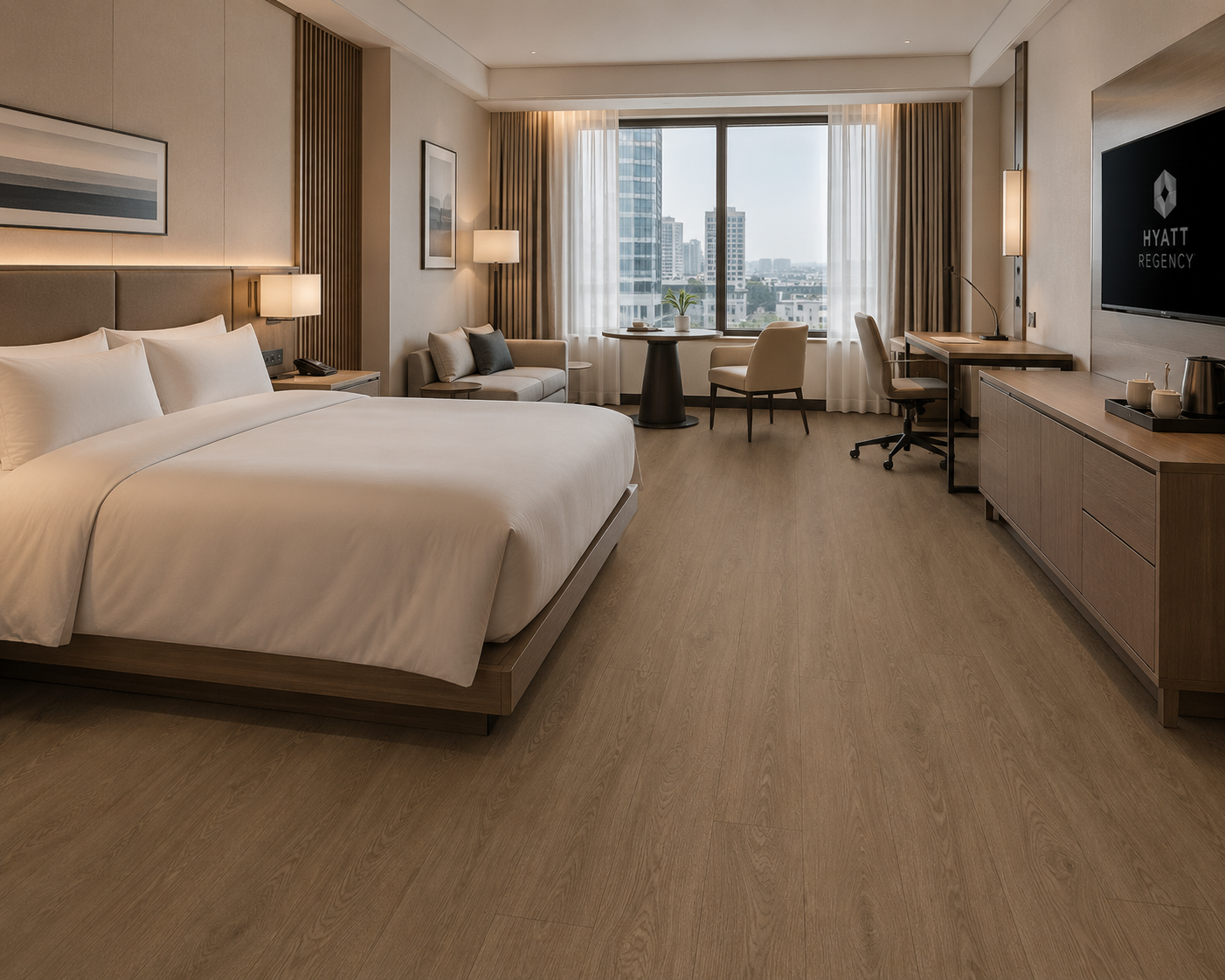
Different rooms have different demands. Here is how LVT and SPC stack up across common residential and commercial spaces:
- Bathrooms: SPC wins. The 100% waterproof rigid core handles humidity, splashes, and standing water without risk of swelling or seam separation. Seal the perimeter with silicone for complete protection.
- Kitchens: SPC recommended. Handles dropped pans, spills, and heavy appliance loads without denting. A 20 mil wear layer provides scratch resistance against chair legs and pet claws.
- Basements: SPC is the clear choice. The rigid core handles the cool, damp basement environment without contracting or warping. Test concrete moisture levels before installation.
- Bedrooms: LVT preferred. The softer, warmer surface is more comfortable for barefoot walking and provides better sound absorption for multi-storey homes.
- Living rooms: Either works well. Choose LVT for comfort and acoustic performance, or SPC if you have heavy furniture, pets, or large windows with direct sunlight.
- Commercial spaces: Glue-down LVT for permanent installations over 200 sqm. SPC with 28+ mil wear layer for retail, offices, and rental properties where DIY installation and future removal are advantages.
Hanflor offers both LVT and SPC product lines tailored to these specific use cases, with wear layers ranging from 12 mil for light residential to 30 mil for commercial-grade applications.
Underfloor Heating Compatibility
Underfloor heating has become increasingly popular, and flooring compatibility is a common concern. Both LVT and SPC can be used with underfloor heating, but with different levels of confidence.
SPC is the better choice for heated floors. Its rigid limestone core handles temperature fluctuations reliably, and most SPC manufacturers fully warrant their products for use with water-based (hydronic) underfloor heating systems. The critical requirement is that the floor surface temperature must not exceed 27°C (some manufacturers allow up to 28°C). Exceeding this limit can cause expansion and joint stress.
LVT can be used with underfloor heating, but compatibility varies by product. Flexible LVT is more sensitive to temperature changes, and some manufacturers restrict or exclude underfloor heating coverage in their warranties. Always check the specific product's certification before specifying LVT over radiant heat.
Installation protocol for heated floors: Turn off heating 24 hours before and after installation. Bring the temperature up gradually — no more than 5°C per day — after installation is complete. This gradual commissioning prevents thermal shock to the flooring.
Maintenance and Care: Keeping Your Floor Looking New
Both LVT and SPC are among the lowest-maintenance flooring options available, but proper care extends their appearance and lifespan significantly.
Daily maintenance is identical for both: sweep or vacuum regularly to remove grit and debris that can act as abrasives underfoot. Damp-mop with a pH-neutral cleaner — avoid steam mops, which can exceed the 27°C surface temperature limit and damage the wear layer over time.
SPC maintenance advantages: The rigid core resists dents and scratches more effectively, meaning the surface maintains its appearance longer under heavy use. SPC also never requires waxing, sealing, or refinishing.
LVT maintenance considerations: Use felt furniture protectors under heavy items to prevent indentation. Avoid rubber-backed rugs, which can discolour the vinyl surface over time. For glue-down LVT, periodically inspect seams for any lifting or adhesive degradation, particularly in wet areas.
With proper care, both flooring types maintain their appearance for 15–25+ years. Individual planks in click systems (both LVT and SPC) can be replaced if one becomes damaged — a significant advantage over sheet vinyl or ceramic tile.
Which Should You Choose: LVT or SPC?
The choice between LVT and SPC ultimately depends on your specific room, lifestyle, and priorities. Here is a concise decision framework:
Choose SPC If You:
- Need maximum durability for high-traffic areas
- Are installing in bathrooms, kitchens, or basements
- Want easy DIY click-lock installation
- Have an uneven subfloor that needs bridging
- Live in a climate with wide temperature swings
- Have heavy furniture or commercial equipment
- Plan to use underfloor heating
Choose LVT If You:
- Prioritise comfort and warmth underfoot
- Are flooring bedrooms or quiet living spaces
- Need a glue-down solution for large commercial spaces
- Want the most realistic embossed textures
- Are working within a tighter budget
- Value superior acoustic performance
- Prefer a wider range of design patterns
Both products are excellent flooring solutions that have earned their popularity through proven performance. The "better" option is always the one that matches your specific application. At Hanflor, we manufacture both LVT and SPC flooring to international quality standards, with FloorScore and CE certifications ensuring low VOC emissions and environmental safety. Our product specialists can help you specify the right flooring for your project — whether it is a single bathroom renovation or a full commercial fit-out.
For more information on our PVC flooring product lines, or to request samples for your project, contact the Hanflor team or browse our product catalogue. You can also explore more flooring guides and articles on our blog.